


Coin Flip Master
2.333.00 Reviews
App Specs
- Version
- 4.0.0
- Updated On
- License
- Free
- Downloads
- 50,000+
- Developer
- PlayWill
- Categories
- Arcade
- Platform
- Android
Screenshots
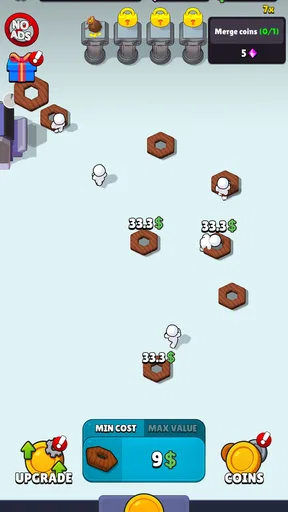
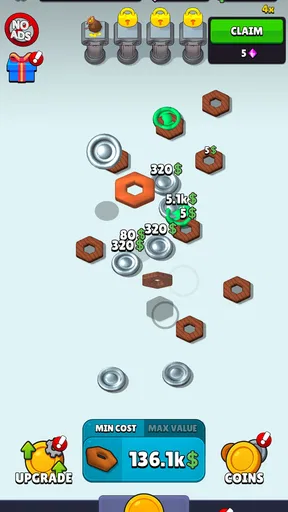
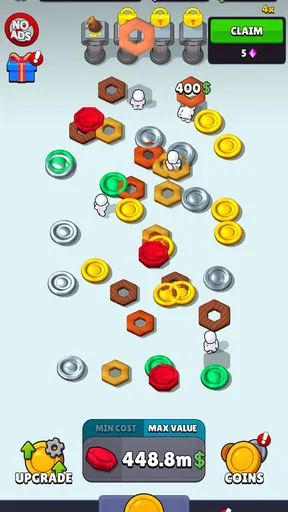
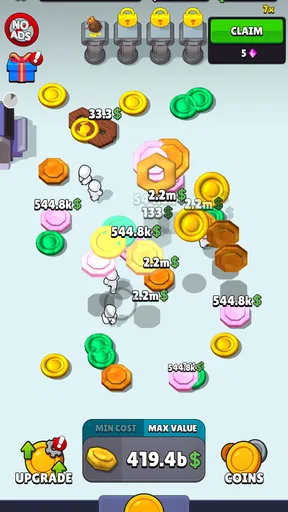
 Analysis by AppCompare
I approached Coin Flip Master as a small, casual arcade game rather than as a serious business simulator. Its central idea is easy to understand: make choices around coin flipping while chasing the fantasy of building enormous wealth. That simplicity is appealing when I want something I can open for a short break, but it also means the game has to create satisfying progress without relying too heavily on repetition or spending.
My overall reaction is mixed. The game is free to start, carries an Everyone age rating, and comes from PlayWill, so it is positioned as an accessible experience for a broad audience. At the same time, its current average rating of 2.3 from around 142 ratings suggests that many players have not found the experience consistently satisfying. I would not dismiss it immediately, but I would approach it with modest expectations and pay close attention to how progress feels before considering any purchase.
How the coin-flipping idea works as an arcade experience
The appeal here is immediate feedback. Coin-flipping games can be understood in seconds, which makes them suitable for quick sessions while waiting for a bus, taking a short break, or relaxing without learning a complicated control scheme. I like that kind of low-commitment design when I am not looking for a long story, strategic campaign, or demanding action game.
However, a simple premise places a lot of responsibility on the progression loop. In a deeper arcade title, new skills, patterns, levels, or challenges can keep the experience fresh. With a coin-focused concept, the satisfaction has to come from seeing meaningful advancement and making decisions that feel worthwhile. If each result feels like a passive roll toward a larger number, the novelty can wear off quickly.
The store summary frames the experience around becoming a billionaire, which gives the game a clear fantasy to aim toward. I read that less as a realistic financial simulation and more as an exaggerated arcade goal. That distinction matters: I would play it for the rhythm of short attempts and visible progress, not for lessons about investing, probability, or managing real money.
The game is listed in the arcade category, and that is the right expectation. I would not install it expecting the depth of a management game or the precision of a competitive action title. Its strongest use case is likely a player who enjoys quick, repetitive interactions with an obvious long-term target. Someone who needs richer systems, detailed explanations, or a constantly changing challenge may find the basic concept too narrow.
What makes the first sessions approachable
The short description, “Coin Flip Master,” communicates the basic theme without making the game sound complicated. That can be a virtue on a phone. I do not need to study a manual before trying the central action, and the idea is understandable even to a younger player. The Everyone rating reinforces that broad accessibility.
Worth Reading Before You Choose

Flipboard Shows What News Apps Must Do Beyond the Feed

Switching to Android Auto Means Rethinking Your Driving Routine

Google Calendar Makes a Crowded Week Easier to Manage

Ludo King Makes the Most of the Minutes Between Plans

Baby Panda World Brings Quick Play to Modern Phones, but Its Game Library Feels Busy

ESPN’s Live Game View Makes Following Close Games Easier
For a family device, that simple presentation may be useful, but I would still make spending decisions carefully. An age rating describes content suitability; it does not automatically mean the game’s purchase flow will suit every household. If a child is using the device, I would make sure purchase approval is enabled at the operating-system level before handing it over.
A practical way to test the game is to begin with a short session rather than committing to a long play period. I would check whether the first few interactions feel active or merely automatic, whether progress is easy to understand, and whether the game gives me a reason to return beyond watching a number increase. Those observations tell me more about its long-term fit than the billionaire theme alone.
Progress can be motivating, but it can also become pressure
The billionaire objective gives every small result a larger context. Even a modest gain can feel like a step toward something huge, which is a familiar arcade technique. I find that kind of exaggerated goal entertaining when the game lets me enjoy the journey instead of constantly reminding me how far away the destination is.
That is where I would watch for pressure. A progression system can encourage one more attempt, then another, especially when a large target is always visible. In a free game with optional purchases, that pressure deserves attention. I would decide in advance whether I am playing for a few minutes of amusement or trying to optimize progress. The second approach can make a simple game feel more demanding than it first appears.
My most useful tip is to treat the in-game fortune as entertainment progress, not as a score that deserves real-world value. That mindset helps keep the experience in proportion. If a session stops feeling playful and starts feeling like a chore to maintain momentum, I would close the game rather than chase the next milestone.
Another practical habit is to avoid buying anything during the first session. I would first learn how quickly the free experience moves, how clearly the game explains its progression, and whether I actually enjoy repeating the core interaction. This is especially important because the available in-app purchases range from $2.99 to $49.99 per item. The lower end may look manageable, while the upper end represents a much more substantial optional commitment.
I would also separate convenience from necessity. If a purchase merely speeds up progress, it may be useful only to a player who already enjoys the game and wants to support continued play. If progress feels uncomfortable without spending, that changes my recommendation. In that situation, I would prefer to remain free-to-play or uninstall rather than turn a casual arcade game into a recurring source of pressure.
Spending deserves a deliberate decision
The game costs nothing to download, which makes trying it straightforward. The important distinction is that free entry does not mean every part of the experience is free. The listed purchase range is enough for me to recommend a cautious approach, especially on shared devices or accounts used by children.
I would not describe the purchase system as unfair without seeing exactly what each item does. The available prices establish the spending context, but they do not by themselves reveal whether purchases remove waiting, provide cosmetic extras, change probabilities, or affect progression in another way. I would read each confirmation screen carefully and avoid assuming that a higher-priced item offers better entertainment value.
For my own use, I would set a clear rule: play without spending until the basic loop has earned a place in my regular rotation. If I am only opening it because I feel behind, that is a warning sign. If I am genuinely enjoying the coin-flipping activity and a small optional purchase adds convenience without becoming necessary, I can evaluate it as entertainment spending rather than as a shortcut to an imaginary fortune.
There is also a useful household workflow. Before installing the game on a child’s tablet, I would use purchase restrictions, keep the account password private, and explain that the billionaire goal is fictional game progress. That does not require treating the game as unsafe; it simply prevents an accessible arcade title from turning into an accidental purchase problem.
Is the competition fair?
The idea of competitive fairness is difficult to judge from the basic product details alone. A coin-flipping game may be primarily personal and casual, or it may invite comparisons with other players through scores or progress. I would not assume either structure without seeing it clearly in the game. What I can say is that any system involving random outcomes should make the player understand what is being decided and what influence, if any, their choices have.
If the experience is mainly a personal climb toward wealth, fairness means that the free path should remain understandable and enjoyable. If purchases can accelerate progress, I would want the game to make that distinction visible rather than presenting paid advancement as if it were earned through skill. A player deciding whether to compete with friends needs to know whether they are comparing persistence, luck, spending, or some mixture of all three.
My advice is not to treat the billionaire figure as proof of mastery. In a coin-based arcade format, a large total may reflect time, random outcomes, optional spending, or simple repetition. That does not make the game pointless, but it does change how I would compare myself with others. I would use the game as a personal diversion instead of assuming that its biggest number represents superior skill.
This is also where a different kind of arcade game may be a better choice. If I want fairness based on reflexes or decisions, I would choose a title with clearly defined controls, repeatable challenges, and outcomes that visibly respond to player actions. If I want a relaxed luck-based toy, Coin Flip Master makes more sense. The right choice depends on whether I value agency or simplicity more.
What I would check before committing
The game was released on January 20, 2026, and its current version is 4.0.0. Those details tell me that I should pay attention to the version shown on my device and read the current in-game explanations rather than relying on an old impression. I would look for clear descriptions of progression, purchase confirmations, and any rules connected to results or rewards.
The minimum operating-system requirement is Android 9. For users with an older Android phone or tablet, compatibility is the first practical question to resolve before planning a download. On a supported device, I would still consider how the game behaves during ordinary use: whether menus are easy to understand, whether progress is saved reliably, and whether the interface makes important choices obvious.
There are also a few questions I would answer through normal use rather than guess about. How much control does the player have over each flip? Does the free route remain enjoyable over several sessions? Do purchases change the pace or the outcome? Are there meaningful milestones, or is the main reward simply a larger total? These points have a direct effect on whether the game feels like an arcade challenge or a repetitive counter.
I would not fill those gaps with assumptions. Instead, I would spend a little time observing the game before making a judgment. That is a more reliable approach than accepting the billionaire theme as evidence of depth or assuming that a low average rating tells the whole story. Ratings can signal dissatisfaction, but personal fit still depends on what kind of short-session entertainment I want.
Who should try it, and who should skip it
I can see this working for someone who enjoys uncomplicated arcade ideas, likes watching a long-term total grow, and wants a game that can be sampled without an upfront payment. It may also suit players who enjoy luck-flavored mechanics and do not need every session to test precise skill. The Everyone rating makes the concept broadly approachable from a content perspective, though spending controls remain important.
I would be more hesitant to recommend it to players who dislike repetition, need strong strategic choice, or want a competitive game where winning clearly depends on technique. I would also suggest skipping it if the billionaire objective makes you feel compelled to keep playing after the fun has ended. A large target can be motivating, but it can just as easily make a lightweight game feel like an obligation.
In an everyday scenario, I might open it during a ten-minute break when I want something less demanding than a puzzle campaign. I would play a few rounds, check whether my progress feels satisfying, and stop while the session still feels light. If I found myself staring at the next milestone and considering a purchase only because the free pace felt slow, I would switch to another arcade game instead.
That comparison is important. Traditional arcade alternatives often offer a clearer relationship between action and result: a better move, faster reaction, or smarter route produces a visible improvement. Coin Flip Master is more appealing when I want uncertainty and a simple wealth-building fantasy. It is less appealing when I want to feel that every outcome came from something I personally executed well.
My trust verdict after weighing the trade-offs
My final view is cautious rather than enthusiastic. Coin Flip Master has a clear, accessible arcade premise and a free entry point, but the modest average rating of 2.3 indicates that the experience has not connected strongly with many of its existing raters. I would try it only with a willingness to stop quickly if the core loop feels repetitive or if progress begins to push me toward spending.
The purchase range, from $2.99 to $49.99 per item, is the main reason I would keep expectations and boundaries clear. I would not spend until I had tested the free experience, understood what a purchase changes, and decided that the game is worth supporting as entertainment. For a child or shared device, I would use purchase controls from the beginning.
PlayWill’s game is best viewed as a lightweight experiment in luck, repetition, and oversized progress. It is not the title I would choose for deep strategy or skill-based competition, but it may provide a few easygoing sessions for the right player. The fact that it has passed 50K+ installs shows that it has reached a real audience, while the rating reminds me not to confuse reach with universal satisfaction.
My recommendation is to try it for free, judge the first sessions on their own merits, and keep spending optional in the strongest possible sense. If the coin-flipping rhythm genuinely relaxes you and the progress feels rewarding without pressure, it can fill a small arcade niche. If you need richer gameplay, transparent competitive skill, or a stronger reason to return, another game in the category will probably serve you better.
Pros
- Simple one-tap controls make it easy for anyone to play.
- Quick rounds are ideal for short breaks or casual sessions.
- Lightweight gameplay should run smoothly on most modern devices.
- Random coin outcomes keep each flip unpredictable.
- Easy-to-understand mechanics require no tutorial or prior experience.
Cons
- Gameplay may feel repetitive after extended play.
- Limited depth may not satisfy players seeking strategic challenges.
- Frequent ads can interrupt the experience in the free version.
- Rewards and progression may feel minimal over time.
- Results are based on luck
- offering little control to the player.
FAQs for Coin Flip Master
What is Coin Flip Master and how does it work?
Coin Flip Master is a casual game centered on flipping virtual coins and testing your luck. After launching a round, you choose or trigger a coin flip and wait for the result. Depending on the version and game mode, the result may contribute to a score, streak, challenge, or reward system. The controls are generally simple, making it suitable for short play sessions.
Is Coin Flip Master free to download and play?
Coin Flip Master is generally available as a free download, allowing users to try the main coin-flipping gameplay without paying upfront. However, the app may include advertisements, optional in-app purchases, or extra features that require payment. Before downloading, it is worth checking the store listing for the current pricing details, subscription information, and whether purchases are protected by device settings.
Does Coin Flip Master require an internet connection?
The basic coin-flipping experience may work without a constant internet connection, which is convenient when playing offline or while traveling. Nevertheless, some functions can depend on online access, including advertisements, cloud saves, leaderboards, events, account synchronization, or reward verification. Availability may also vary between Android and iOS, so offline support should be confirmed on your device.
Are the results in Coin Flip Master based on real randomness?
Coin Flip Master uses a digital randomization system to determine whether the result is heads or tails, rather than flipping a physical coin. This makes the experience quick and consistent, but it should not be treated as a reliable way to predict real-world outcomes or generate guaranteed rewards. If the app offers competitive modes, users should review its rules and reward conditions carefully.
Is Coin Flip Master suitable for children and safe to use?
The simple gameplay is usually easy for children to understand, but parents should still review the app’s age rating, advertisements, permissions, and purchase options before allowing access. Some versions may display third-party advertising or encourage repeated play through streaks and rewards. Using parental controls and disabling unauthorized in-app purchases is recommended, especially on shared family devices.


